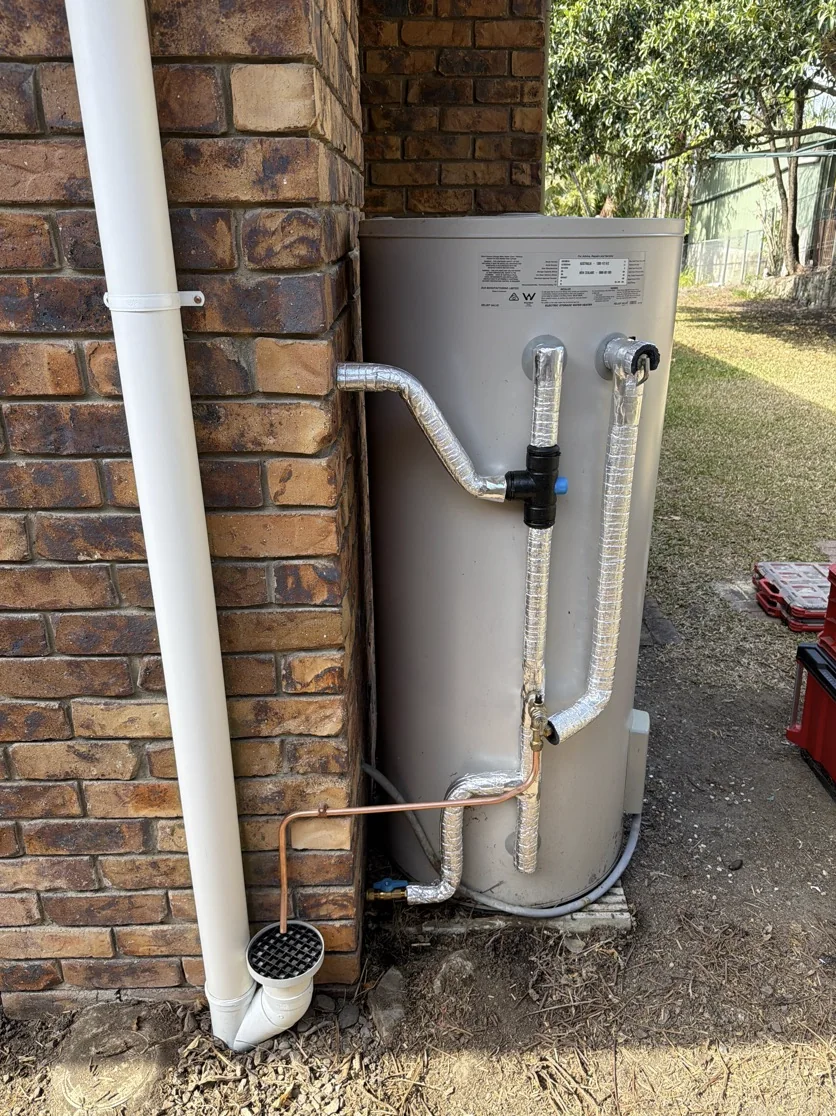
Why some tanks have a sacrificial anode
Many enamel-lined storage tanks have a sacrificial anode. This metal component corrodes first to help protect the tank. Tank designs and anodes vary. Whether and when to check or replace an anode depends on the manufacturer's instructions, the tank's condition and the local water supply.
An anode won't fix a tank that's already leaking. If you see corrosion or water escaping from the tank, ask a plumber to assess it rather than assuming one part will solve the problem.
Sediment in a storage tank
Minerals and particles can settle in a storage tank over time. How much this matters depends on the water supply and system. A plumber can decide whether the tank needs an inspection or flush and follow the manufacturer's procedure. Flushing won't fix every performance or noise problem.
Opening or draining a tank can expose you to scalding water, pressure, and electrical or gas hazards. Don't try this yourself.
What to tell your plumber
Only note the brand, model or visible changes if it is safe to approach and there is no suspected gas leak or immediate hazard. Keep the owner's manual or service history if you have it. A plumber can assess routine maintenance; work on gas components must be done by an appropriately licensed gas fitter, and electrical work by an appropriately licensed electrician.
What to look for
- Keep the model details and records of previous services, if available.
- From a safe position, note any changes in noise, hot-water supply or visible leaks.
- Check the owner's manual for manufacturer-specific maintenance guidance.
Work for a licensed tradesperson
- Check the anode, tank and other components where the system design allows.
- Assess whether flushing is suitable. Gas work must be done by an appropriately licensed gas fitter; electrical work requires an appropriately licensed electrician.